

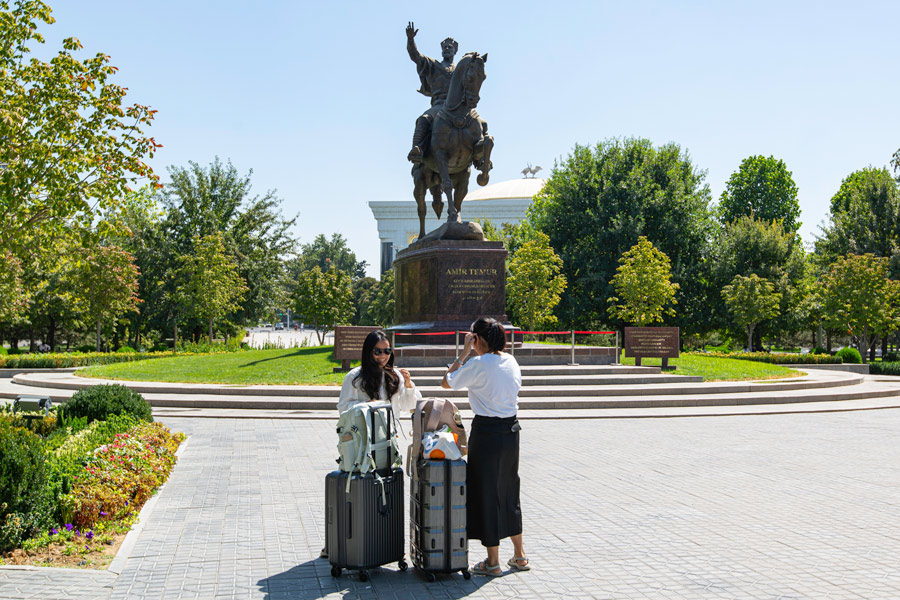
Planning a trip to Uzbekistan is relatively straightforward, but a few practical details are worth sorting out before you travel. Entry requirements depend on nationality, while train tickets and accommodation can be in high demand during the busiest travel months. It is also useful to understand how registration, payments, mobile internet and customs work before you arrive.
This Uzbekistan Trip Planner covers the main practical information for preparing your journey and travelling around the country. For quick answers to other common questions, see our Uzbekistan Travel FAQ.
Before Your Trip to Uzbekistan
Visa and Entry Requirements
Uzbekistan has visa-free arrangements with many countries, although the permitted length of stay varies by nationality. Travellers who do require a visa may be eligible to apply online for an electronic visa.
Check the current requirements for your nationality on our Uzbekistan Visa page before travelling.
When to Book
April–May and September–October are the most popular months for travel in Uzbekistan. If you plan to visit during these periods, it is worth arranging accommodation and transport in advance, particularly train tickets between the main tourist cities.
For more information on seasonal conditions, see our Best Time to Visit Uzbekistan guide.
Travel Insurance
Travel insurance is not required for entry into Uzbekistan, but it is mandatory for travellers booking a tour with Advantour. Your policy should cover the full duration of your trip, including medical treatment and repatriation, and ideally also luggage loss, cancellation and interruption of travel.
Travellers should arrange their own policy before departure and check what procedure their insurer requires if medical treatment is needed abroad. More information on healthcare, emergency numbers and insurance is available on our Medical Care in Uzbekistan page.
Travelling with Medication
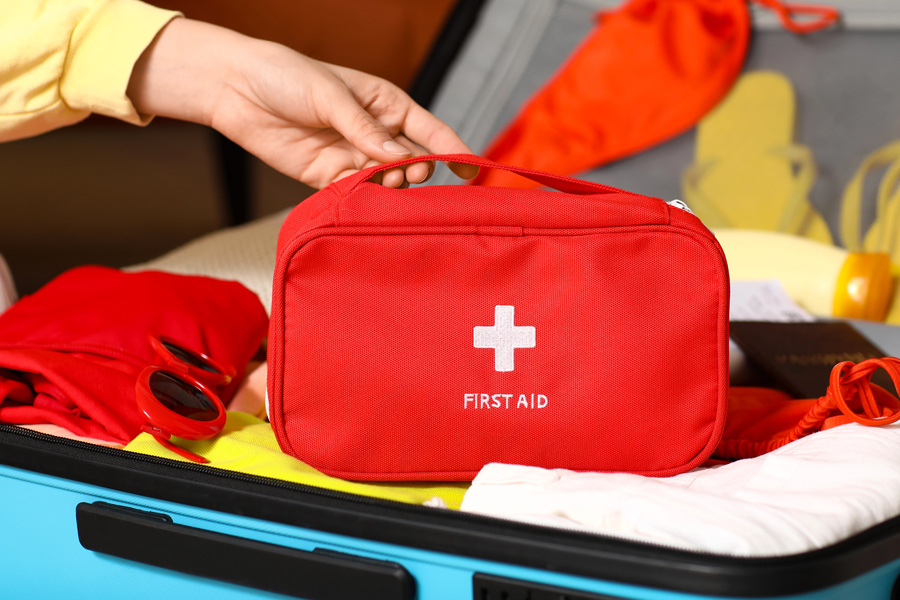
Most medicines for personal use can be brought into Uzbekistan without special documentation if they remain in the manufacturer’s packaging and do not exceed the permitted quantities. Without a medical certificate, travellers may bring up to 10 different medicines, with no more than five packages of each.
Different rules apply to medicines containing narcotic or psychotropic substances. Narcotic medicines may be brought in only in quantities corresponding to no more than seven days of treatment and must be supported by documentation from a medical institution stating the medicine and the amount required for the course of treatment.
For psychotropic medicines, up to five different medicines and no more than two packages of each may be brought in for personal use without a medical certificate, provided the quantity does not exceed the course of treatment.
Travellers carrying narcotic or psychotropic medicines must declare them when crossing the border. As familiar medicines can contain substances that are controlled in Uzbekistan, check the active ingredients of any prescription or regular medication before travelling.
For a more detailed list of controlled substances and medicines, see our Medications List.
Planning Your Uzbekistan Route
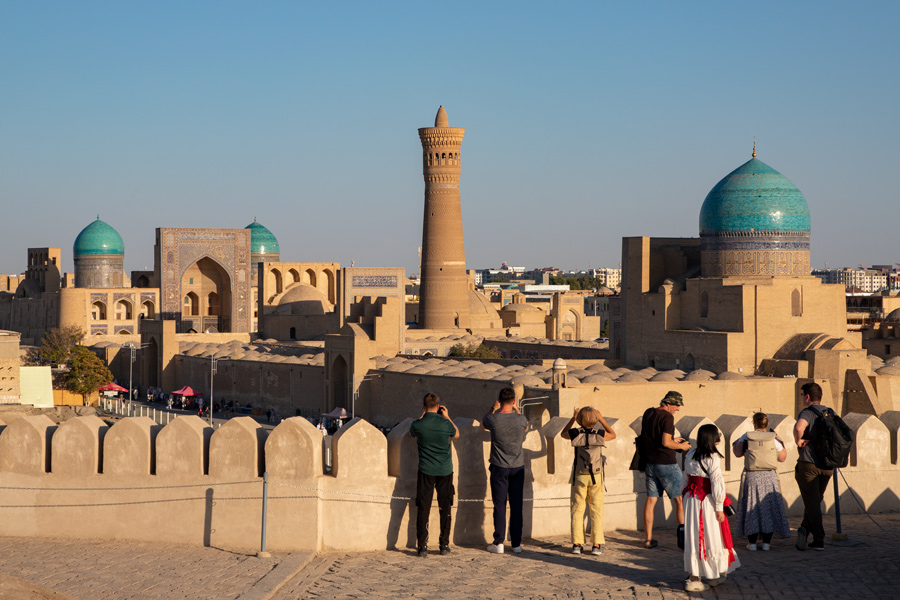
For a first visit, a practical route is Tashkent, Samarkand, Bukhara and Khiva. All four are connected by rail, but the journey west to Khiva is much longer than the Tashkent–Samarkand–Bukhara legs, so allow more time for this part of the route.
If you have less than a week, it is better to focus on Tashkent, Samarkand and Bukhara. Around eight to ten days gives enough time to include Khiva without rushing from city to city. With more time, you can extend the trip to the Fergana Valley, the mountains near Tashkent, or Karakalpakstan and the Aral Sea, depending on your interests and the season.
Once your dates are fixed, make the bookings that are hardest to change first: international tickets and accommodation in the busiest months, then popular train tickets as soon as sales open. Domestic flights or private transfers are most useful for longer legs that are not conveniently covered by rail. If you prefer to have these arrangements handled for you, our Uzbekistan tours include transport, accommodation and the main travel logistics.
Getting to Uzbekistan
By Air
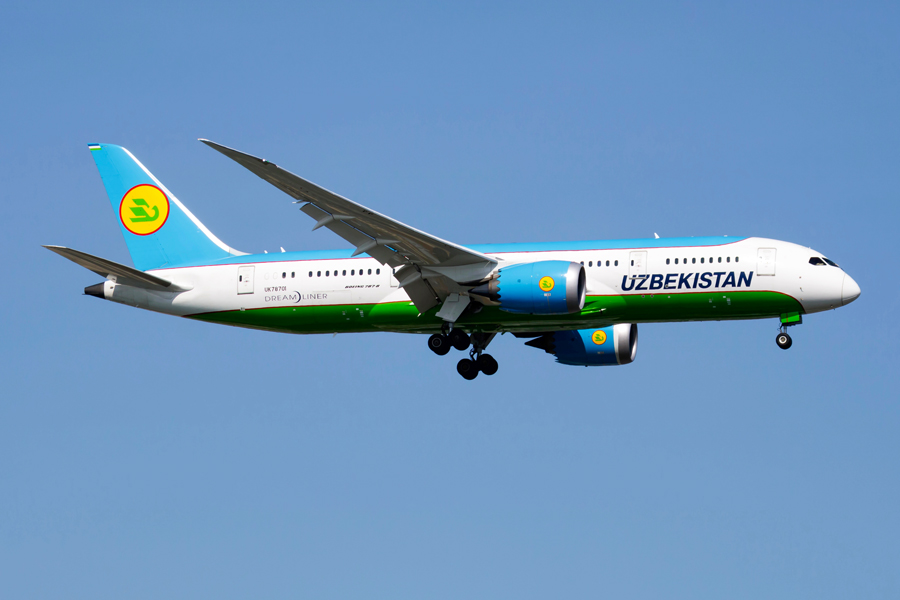
Flying is the main way most international travellers reach Uzbekistan. Tashkent is the country’s principal international gateway, with direct flights to major hubs and cities including Istanbul, Dubai, Seoul, Bangkok, Moscow and New York. Many European destinations are also accessible either directly or with one connection.
Samarkand and several other regional airports also handle international flights. Depending on your route, it may be possible to fly directly into Samarkand or another regional airport and leave from Tashkent, or vice versa, avoiding unnecessary backtracking.
Routes and flight frequencies change throughout the year, so check current schedules when planning your journey.
See our Uzbekistan Flights page for airlines, routes and further information.
By Train and Land
Uzbekistan can also be reached overland from neighbouring countries. International rail services connect Tashkent with destinations including Shymkent and Almaty in Kazakhstan, as well as Moscow. Timetables and routes may change, so it is advisable to check current schedules before travelling.
For more information, see our International Trains page.
Getting Around Uzbekistan
By Train
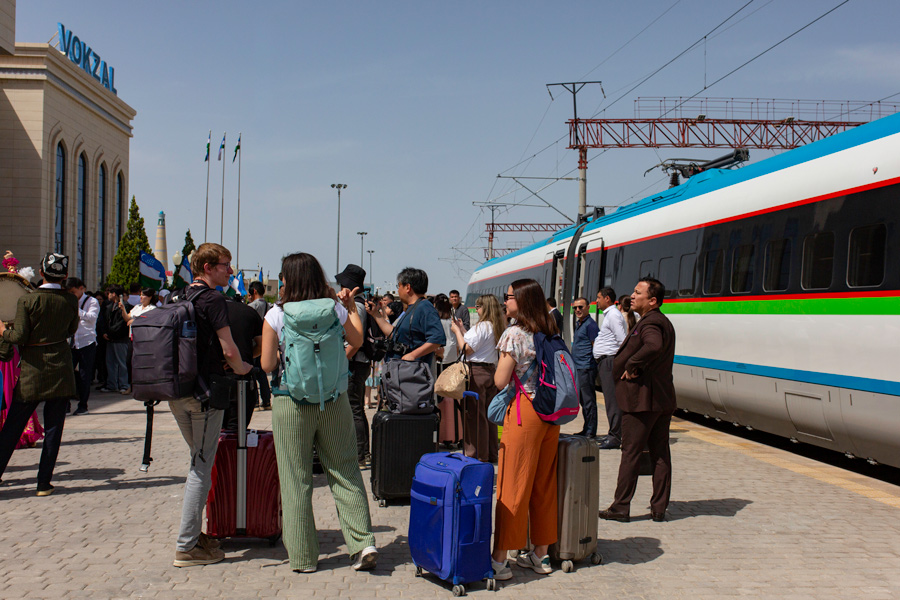
Train travel is one of the most convenient ways to get between Uzbekistan’s main tourist cities. Afrosiyob high-speed train connects Tashkent with Samarkand and Bukhara, while the Jaloliddin Manguberdi high-speed train runs between Tashkent and Khiva, with stops in Samarkand, Navoi, Bukhara and Urgench. Daytime and overnight trains serve a wider network of destinations across the country.
Popular services, especially Afrosiyob trains, can fill up quickly during the high season. Tickets usually go on sale around 30–45 days before departure, depending on the route, so if your travel dates are fixed, it is best to book as soon as sales open.
For routes, train types and current schedules, see our Uzbekistan Trains page.
Domestic Flights
Domestic flights are most useful when they save a long overland journey, especially between Tashkent and more distant parts of the country. They can make sense for routes involving Khorezm or Karakalpakstan, while rail is usually the simpler choice between Tashkent, Samarkand and Bukhara. Several airlines operate domestic services, although routes and frequencies vary.
See our Uzbekistan Flights page for more information.
By Car and Private Transfer
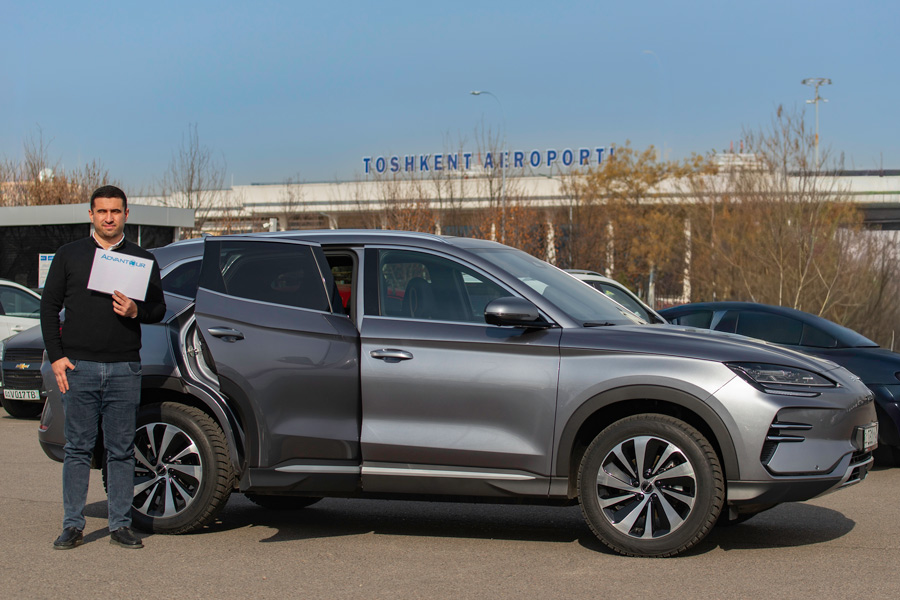
Travelling by car is useful for destinations that are not conveniently connected by rail and for itineraries combining cities with smaller towns, mountain areas or other places outside the main railway network. It is also practical when a route includes several stops in one day, where fixed train or flight schedules would add unnecessary backtracking.
Private transfers are available between many of Uzbekistan’s major cities, airports, railway stations and border crossings. See our Uzbekistan Transfer Services page for details.
Getting Around Cities
Public transport is inexpensive and widely available in Uzbekistan’s main cities. Tashkent has an extensive metro and bus network, while taxis and ride-hailing apps are convenient in the main tourist destinations.
Payment options vary between cities. In Tashkent, fares can be paid electronically using an ATTO transport card, bank card or supported mobile payment method. Passengers paying in cash can purchase a single-use QR ticket from an info kiosk.
For detailed information on the capital’s metro, see our Tashkent Metro page.
Money, Cards and Internet
Currency, Cash and Exchange
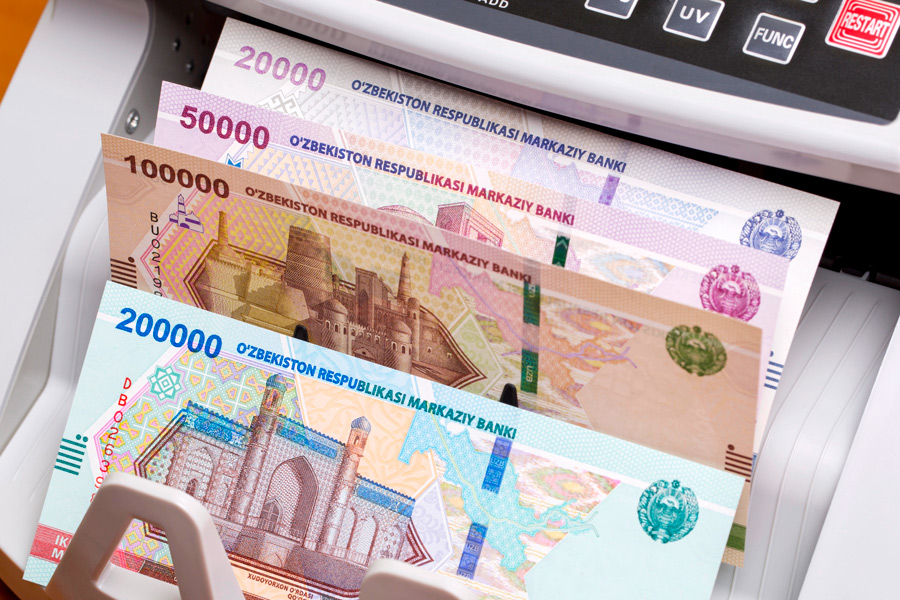
The national currency of Uzbekistan is the Uzbek soum (UZS). Foreign currency can be exchanged at banks and official exchange offices, and ATMs are widely available in major cities.
Cash is still useful for markets, small cafés, local transport and purchases outside the main tourist centres. Before travelling to smaller towns, villages or remote areas, withdraw enough Uzbek soum for everyday expenses, as card acceptance and access to ATMs can be less reliable.
For more information on the local currency and exchanging money, see our Uzbekistan Currency page.
Cards and ATMs
Visa and Mastercard are widely accepted at hotels, restaurants, supermarkets and many shops in Tashkent, Samarkand, Bukhara and other major cities. In Tashkent, contactless bank cards can also be used to pay for public transport.
ATMs are widely available in major cities and generally dispense Uzbek soum. Withdrawal charges and limits depend on the issuing bank and the ATM operator.
If you are relying mainly on cards, keep a small cash reserve rather than waiting until you reach a remote area to look for an ATM.
SIM Cards, Internet and IMEI Registration
Wi-Fi is widely available in hotels, restaurants and cafés, although connection quality can vary.
Local SIM cards are available to foreign visitors, including tourist packages offered by mobile operators. SIM cards can be purchased at international airports and official mobile operator outlets, usually on presentation of a passport. Non-residents purchasing a local SIM card should make sure it is registered with non-resident status.
Foreign visitors can use a mobile phone brought into Uzbekistan without registering its IMEI code for up to 60 calendar days from the device’s first connection to a local mobile network. This period does not restart when you leave and re-enter Uzbekistan. If you expect to use the same phone in Uzbekistan after the 60-day period, register its IMEI in advance to avoid the device being blocked on local mobile networks.
IMEI registration is required only once for each device and remains valid if you later change SIM cards. Registration can be completed through the official UZIMEI website.
An eSIM can also be a convenient option for travellers whose phones support it.
For more detailed information on mobile operators, SIM cards and internet access, see our Internet in Uzbekistan page.
Arrival in Uzbekistan
Getting from the Airport
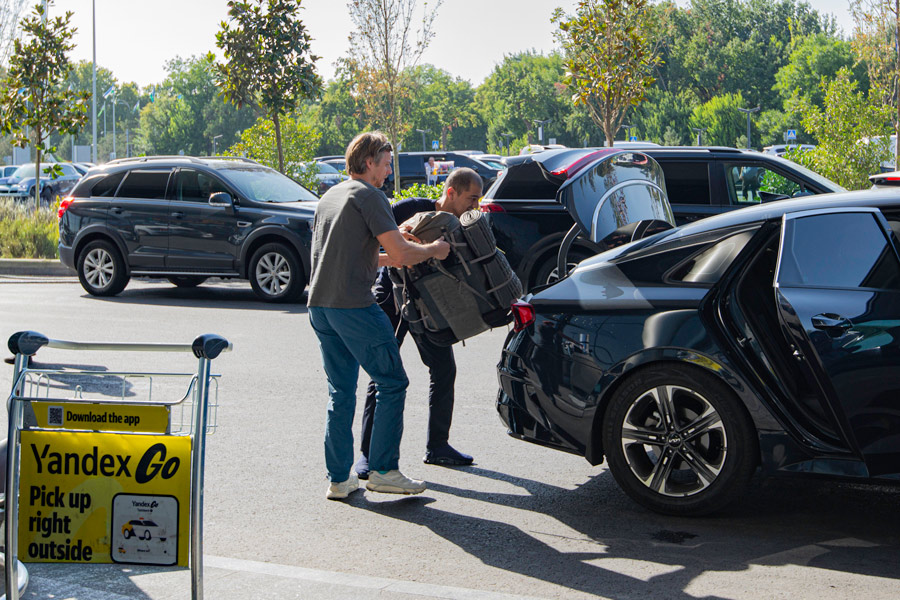
Taxis and private transfers are available at Uzbekistan’s main international airports. If you prefer to arrange transport in advance, Advantour provides airport and railway station transfers in Tashkent, Samarkand, Bukhara and other cities.
When taking a taxi independently, it is usually easiest to use a recognised ride-hailing app such as Yandex Go or Fasten. Avoid accepting unsolicited rides from private drivers outside the terminal.
See our Uzbekistan Airport and Railway Station Transfers page for transfer options and current prices.
Practical Essentials
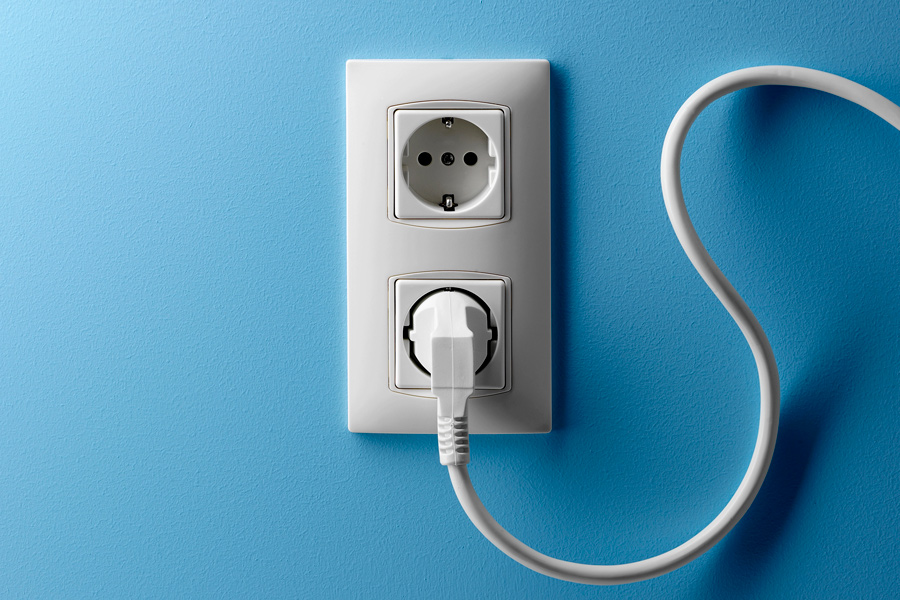
Electricity: Uzbekistan uses a 220V, 50Hz electricity supply and Type C and Type F sockets with two round pins. Travellers whose plugs use a different format will need an adaptor; check the voltage rating on appliances that are not designed for 220V.
Time zone: Uzbekistan uses UTC+5 year-round.
Emergency services: Call 112 for the unified emergency service. The number connects callers with the relevant emergency services across Uzbekistan.
Drinking water: For drinking, bottled or boiled water is the safer choice. Uzbekistan’s official tourism guidance advises travellers not to drink untreated water, particularly water from open sources.
Customs
Most travellers arriving in Uzbekistan do not need to complete a passenger customs declaration unless they are carrying cash, goods or other items that must be declared.
Cash in Uzbek soum or foreign currency may be brought into Uzbekistan without an overall limit. However, amounts exceeding the equivalent of 100 million UZS must be declared to customs. Smaller amounts may also be declared voluntarily.
Travellers carrying narcotic or psychotropic medicines, certain valuable goods or other restricted items should follow the applicable declaration requirements. See the Travelling with Medication section above for details.
Passenger customs declarations can also be completed electronically before passing through customs.
Registration
Foreign visitors staying in Uzbekistan are generally required to register their place of stay within three working days of arrival. Visitors staying in the country for no more than three working days are exempt from this requirement.
Hotels and other official accommodation providers normally complete the registration for their guests through the E-mehmon system. If you stay in private accommodation, your host is responsible for arranging your registration.
Keep your registration confirmation throughout your stay. If you change accommodation, make sure you are registered at the new address within three working days.
Leaving Uzbekistan
Departure Formalities
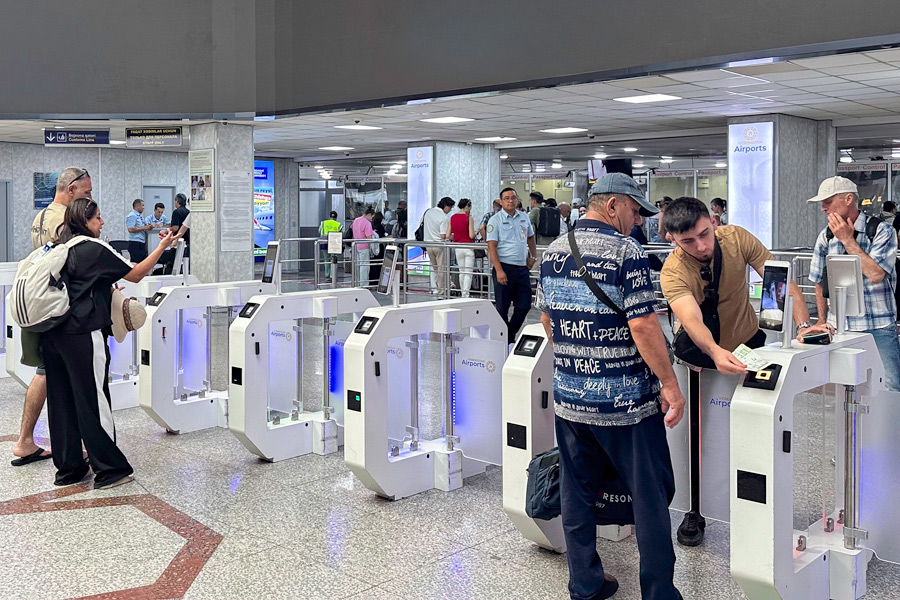
For international flights, it is advisable to arrive at the airport around three hours before departure to allow enough time for check-in, security, passport control and, if required, customs procedures.
Before leaving for the airport, make sure you have your passport, travel documents and, where relevant, any customs permits or documents required for medicines or other restricted items in your luggage.
Cash in Uzbek soum and foreign currency up to a total equivalent of UZS 100 million can be taken out of Uzbekistan without restriction, subject to customs control rules. Amounts above this threshold may only be exported in specific cases provided for by law. If you plan to travel with a large amount of cash, check the current customs requirements in advance.
Souvenirs and Cultural Property
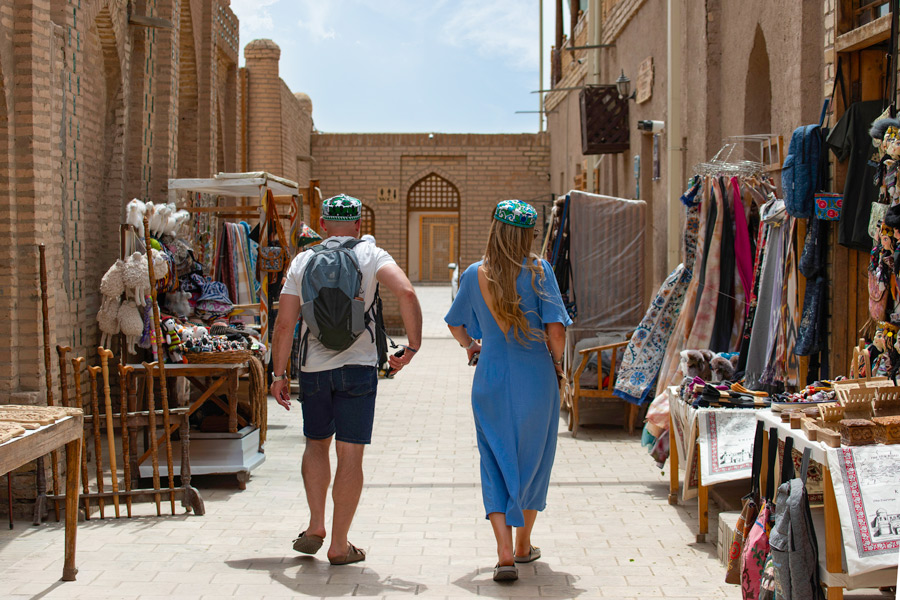
Most ordinary souvenirs can be taken out of Uzbekistan without special documentation. However, restrictions apply to antiques, works of art and other objects that may be considered cultural property.
Cultural property created 50 or more years ago may not be exported from Uzbekistan. The same applies to items included in state protection lists or registers. Cultural items made within the last 50 years may also require an export certificate unless they fall within an exempt category, such as certain modern mass-produced souvenirs and handicrafts.
When buying carpets, suzani, artwork, ceramics, jewellery or other items that could appear old or valuable, keep the receipt and any certificate provided by the seller. If an item may qualify as cultural property, check whether an export certificate is required before departure.
For ideas on what to buy and more practical advice, see our Uzbekistan Souvenirs page.